The Shale Boom and the Likely Shift in the Global Balance of Power

The shale boom will primarily benefit democratic countries such as the United States, which has large shale reserves. Europe has been slower to adopt the processes needed to extract oil and gas from shale economically.

Overview

Oil shale is a sedimentary rock that contains kerogen, a mixture of organic compounds from which oil can be extracted. Hydraulic fracturing, or fracking, is the process of fracturing layers of rock by injecting a liquid into a fault under high pressure with equipment that uses diesel engines. This process releases a variety of petroleum products for extraction such as oil and gas.

Shale is a highly porous rock, so the technology needed to extract shale oil and shale gas wasn’t developed until 1997. This particular fracking technique is known specifically as “slickwater fracturing” because it involves the use of additional chemicals to increase the flow of fluid through the pipeline. The United States and several other countries are currently planning to use slickwater fracking to produce oil and gas from shale on a commercial scale.

US

Fracking is allowing the US to gradually reduce its dependence on foreign oil by extracting it from sources that were previously uneconomical to recover. The wars in the Middle East and the 2008 financial crisis have caused the US to adopt a less aggressive foreign policy and become more concerned with domestic issues. The prospect of becoming self-sufficient will therefore reduce the US’s need to protect the Middle East and the shipping lanes needed to transport fossil fuels.

The shale boom is allowing the US to increase its production of oil and gas more quickly than any other country in the world. Citigroup reports that the US has increased its production rate by 2.59 million barrels of oil per day over the last five years. This bank also predicts that shale extraction will drive an increase of 6.6m b/d by 2020.

Europe

Shale extraction has been less productive in Europe, where early attempts at fracking have been disappointing. This source of fossil fuel is also less profitable due to abundant coal deposits. More important issues have also prevented the development of fracking technology in Europe. For example, the Houston Chronicle reports that German brewers are lobbying to block fracking attempts due to the possible contamination of groundwater used to make beer.  That’s a shame… so we’ll be sending more engines and generators down in South America where shale growth is more welcome.

Choosing The Right Generator For Your Drilling Rig

Choosing The Right Generator For Your Rig

There is a seemingly endless amount of rigs and compatible generators. For each combination, there seems to be an equal amount of diverse and far-off oil fields to drill. Naturally, the mix-match nature of rigs, generators and oil fields can leave some of us in the industry, even seasoned experts, completely perplexed about which combination is best. I have found that regardless of whether a generator is meant for more desolate conditions, or a fairly routine drilling location, you can never consider enough variables. This is primarily due to the fact that once you commence drilling, a number of things can happen to throw you for a loop, which most notably include environmental factors, varying terrain, and any other unforeseen circumstances.

The Essentials To Look For In The Right Generator

Throughout my years in the industry I have come to realize that regardless of the job, conditions, or rig, there are always a few common things an on-site generator should have. To give you a better idea of what I mean, here are the things I look for in a good on-site generator.

Adaptability: A reliable generator is one that can prove itself in practically any situation, and under any circumstances. In other words, versatility is key when it comes to operating under varying environmental conditions, such as harsh heat, and other extreme weather.

Alternative Fuel Sources: Another useful quality that more modern and versatile generators share is the ability to run off other fuel sources than just diesel. For the longest time diesel generators dominated the industry, however, more recent innovations have been made, allowing generators to run off alternative fuel sources like methane and natural gas.

Reliability: Drilling in the middle of nowhere can be ironic in that it is one of the most remote forms of work, yet it requires the most reliability in terms of power. If you and your team are hundreds of miles away from civilization and suddenly lose power, it can be catastrophic. For such reason, reliability in a generator is paramount.

Additional Things To Consider In A Generator

Whether it is a single diesel generator, or several natural gas generators, a reliable model must provide power in the most extreme conditions, and in the most remote locations. In addition to performing under pressure, a good generator will require little maintenance, and hopefully zero downtime. In terms of operating expenses, maintenance can be costly, and downtime in the field can be even more expensive. Regardless of extra initial cost, a quality generator that does not breakdown, or require much maintenance, is crucial to the success of drilling.

From my experience, one of the most underestimated traits of a quality generator is toughness. Powering a drill site is a lot different than powering a municipality or similar facility. On the job, a generator must withstand unstable and rough terrain, as well as constantly being surrounded by dirt and debris.

Lastly, in the new age of strict regulatory standards, it is important to consider such performance aspects of a generator. In other words, if a generator is not performing properly, then it should either undergo necessary maintenance, or be replaced entirely in order to fulfill the regulations and requirements expected of it.

Conclusion

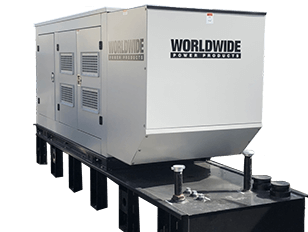
As high of expectations as I have for all the diesel and natural gas generators we sell at Worldwide Power Products, I am also absolutely amazed at how well they standup to harsh conditions and performance tests. A solid generator will never let you down under such conditions, and if it does, you need to find a better option.

Are Your Generators Ready For Summer, High Temperatures And Rolling Blackouts?

Are Your Generators Ready For Summer, High Temperatures And Rolling Blackouts?

Many companies, or other organizations that have facilities of basically any size, surely know how brutal the summer months can be with power outages and rolling blackouts. Just as the same issues during the winter were fading from your memory, now you have to worry about the high temperatures and sweltering heat of summer causing power problems for your facility. Such power issues typically occur in the form of blackouts or brownouts, and are presented when there is a dramatic influx in power usage by residents located on a particular power grid. As you can imagine, when it is ridiculously hot outside, many people flock indoors — cranking up the A/C and putting fans on full blast.

Living in Texas, I sure know how hot it can be in various parts of this country, and I really can’t blame people for wanting to cool off indoors, or by any means possible. Unfortunately, when everyone does so at the same time, it puts serious stress on the power grids, which is when outages occur. To prevent such from happening, or to at least reduce the effect that a summer power outage has, there are a couple things that can be done.

1. If you feel like hoping up on your soapbox, then try to get people to use less energy during the hottest parts of the day. While this can work, and people should generally conserve the energy they use during peak usage hours of the day, more often than not, the need to cool-off from hot weather trumps the urge to conserve electricity. With that said, measures such as Demand Response have helped communities become more aware of their power usage during these vulnerable times.

2. The other option is to buy a backup power generator for your facility in preparation for a summer power outage. In actuality, you should probably do this regardless of whether you take on the first option, as it is always best to be prepared for a blackout.

As mentioned, Demand Response protocol can be used to effectively reduce electricity usage during peak hours. Doing so will allow your facility to conserve energy when it counts, and if all else fails, hopefully you will have a backup generator to shield the burden of not having an active power grid to support your facility.

At Worldwide Power Products, we encourage all of our current and prospective clients to have generators, portable if possible, in case the local power grid fails during the summer. Additionally, we also tell people to encourage their local community facilities, like hospitals and churches, to also have generators, diesel, or any kind for that matter, ready in case of a summer power outage. When it comes to powering a facility that is vital to the needs of a community, relying on backup power generators and a Demand Response system is essential. There really is no better way to support large facilities within a community in such a way.

Conclusion

While the preventative measures of a Demand Response program can reduce the likelihood of blackouts through conservative energy usage when it counts the most, after it is too late and a power grid becomes overwhelmed, the best remedy is to have a backup generator ready to go. Personally, I have been witness to rolling blackouts, brownouts, and pretty much every other type of power outage you can think of. I have also been in situations where the building I was in simply did not have an adequate method of supplying backup power. So, I recommend taking the necessary steps to ensure your facility is prepared with a backup generator at all times, instead of wishing you had in the middle of a heat wave.

Bi-Fuel – Get Your Green On!


It may sound like a big cliché for me to say, however, now really is an exciting time to be involved with generators and engines. I say this with only the up-most sincerity knowing full well that the current trend of generators could continue on its current trend of more conventional diesel models. However, there are also a number of exciting new options that have created optimism in the industry. More specifically, I am referring to the exceptional advances in generator and engine technology that have made appearances in the industry as of late, and that have subsequently begun to provide some exciting new options for many users. One of the most notable is the bi-fuel engine generator. I strongly believe that it has the potential to change generators for the better. For those unfamiliar with a bi-fuel system, it is a type of diesel engine ignited through compression and operates on both diesel and natural gas combustion, but with a strong emphasis on the latter. The simultaneous usage of natural gas and diesel give bi-fuel generators more adaptability and efficiency for users when relying on the power source for a number of different functions. It is hard to argue that the bi-fuel engine generator is not a bright light in our industry and represents a more eco-conscious awareness as well.

A Little More About Bi-Fuel Engine Capabilities

The bi-fuel system provides a reliable and more environmentally friendly method of standby power than traditional diesel generators. Upon ignition, the bi-fuel generator runs off of only diesel fuel, which is most of the extent of the fuel source’s involvement within the generator. Although, as the bi-fuel engine system continues to run, it predominantly operates on natural gas at around 90 percent, with the remaining10 percent coming from diesel. As you can likely imagine, this detachment from diesel fuel allows users to rely less on the fuel source and more on natural gas, which is easier to store. Additionally, bi-fuel allows generators to extend run times through the process. This is especially useful for those that rely on generators, diesel in particular, during long power outages, such as a storm or other natural disaster. While cost may be a concern for some thinking about buying a bi-fuel generator, the cost of such models is only incrementally higher than conventional diesel generators, and is generally well-worth the extra expense.

Get Your Green On

Because bi-fuel predominately uses natural gas opposed to traditional generators, which mostly, if not entirely, run on diesel, they are considered by many experts to be “greener.” Natural gas is cleaner burning and therefore releases fewer emissions into the air when in use. This is a significant improvement from diesel, which comparably does have higher amounts of emissions. What’s more, bi-fuel generators let off 30 percent fewer nitrogen oxides emissions and 50 percent less particle matter compared to diesel models.

Whether you are looking for a generator with improved performance, or a model that can help your company get its green on, I personally recommend the bi-fuel option. It is easy to say that it will be the wave of the future for our industry, but I truly believe that you will be hearing about bi-fuel a lot in the future. Because it has the potential to improve so many aspects of how generators improve backup power supplies and other useful functions, there is enormous potential there. If you are at all hesitant about the bi-fuel generator, you should at least give it some consideration as it can save your facility in a pinch, and help improve the environment in the process.

Risky Business not having a Back –Up Generator

Humans are naturally good at being humans, which is why it never ceases to amaze me at how bad we are at planning ahead. There is perhaps no better example than not having an on-site back-up generator. Storing such a generator for an emergency is something that doesn’t really take much time or effort, and comparatively, can serve as an invaluable safety net under the worse circumstances.

Learn From The Bad Examples

I am astounded by the number of facilities in the news recently that have run into serious trouble without back-up portable generators. The need for back-up power should be a paramount concern for places like banks, hospitals, large event venues, and big corporations. These important organizations simply cannot afford to endure any additional downtime during or after an emergency situation like a natural disaster.

Medical facilities, such as hospitals, are likely best known for either thriving or failing when disaster strikes. This is likely because they hold a high profile position in any (and every) community around the country. So, naturally, when an emergency happens, it is assumed such a facility will be prepared with back-up power. This, however, is not always the case as a surprising number of medical facilities around the country turn out to have faulty diesel and natural gas generators badly in need of maintenance repair, or replacing all together.

I recently read about how the NYU Hospital in New York experienced trouble with their back-up power supply during Hurricane Sandy. Although the hospital had been through a similar, albeit less severe, situation with Hurricane Irene, they were fairly confident in their back-up power system. However, when Sandy snuck up on them, their back-up power was exposed, making them realize the improvements that needed to be made in order to handle a storm of such magnitude. Now, the hospital has scheduled the necessary improvements in order to handle any future needs for adequate back-up power to the facility. Their renovations are scheduled to be complete by 2014.

The Importance Of A Solid Back-Up Plan

Before disaster such as a hurricane, tornado, or other form of natural disaster strikes, it is entirely necessary to have a thorough and actionable back-up plan in place. In mapping out the procedures for when such an unfortunate event occurs, knowing how to switch your facility to back-up power is critical to the well being of those inside your facility, as well as the survival of your business. In doing so, you should map out a plan for your employees and customers to access the back-up power generator you have on-site. I am a firm believer that every company, large or small, should have such a plan in place. Truth be told, and we hear this all the time, but it really is true that you never know when disaster is going to strike, so it is best to always be prepared. At Worldwide Power Products, we have a plan in place in case of an emergency, and of course, we also have plenty of generators on-site (go figure).

The reason that I advocate so strongly for emergency plans with adequate back-up power is that doing so can save lives. It could be a neighbor, a loved one, or someone you have never met before, but the point is that having a quality generator on-site during a disaster ensures that everyone is taken care of. Whether it is having a bunch of diesel generators as a back-up power source for a hospital, or a single generator to power a bank during a bad storm, having a power source when there is an outage is critical to an organization.

I simply cannot stress enough how important it is to have proper back-up power to a facility. You really never know when disaster will hit and the last thing you want is to have to wait out a storm in the wet and cold, putting the lives of the people you are responsible for in jeopardy. So, whether you take my word for it, or use NYU Hospital as an example of what to avoid, go take the time to ready your back-up power system for any future disaster that could affect your area. It is an opportunity that should not be wasted.


The Growth In Argentina Is Exploding!

In a country emerging as a large oil and gas producer, there is undoubtedly a need for energy. In the case of Argentina, there is no difference. The country’s shale plays have tremendous potential for companies to expand, businesses to start-up, and for investors to prosper. At Worldwide Power Products, as a company, we are excited to be increasing our involvement in Latin American counties such as Argentina. We will provide diesel generators, engines, and many other types of power products to aid companies in tapping the shale plays scattered throughout Argentina’s basins.

In some ways you could say we are looking to fulfill Argentina’s demand for energy, and while we may only play a small role in that fulfillment, the large growth in population will definitely require further power generation to the region. In addition, major petroleum companies are expanding, resulting in a virtual explosion of oil drilling throughout the country, also requiring more readily available energy.

Argentinian Shale

Undoubtedly, the U.S. has had its fair share of recent shale plays, but Argentina is also becoming a noteworthy member of the shale community. So noteworthy in fact, Argentina has found itself third on a list — compiled by the U.S. Energy Information Administration — of countries with the most shale gas potential, behind only the U.S. and China. More specifically, the vast majority of shale oil reserves sit under the Neuquén Basin, which is located in Western Argentina, spanning much of the Rio Negro, La Pampa, and Mendoza provinces. Thus far, upwards of nearly 150 million barrels of oil and significant amounts of gas have been found leading a large number of people in the industry flocking to the area.

With such big oil potential in Argentina, it only makes sense that the various shale plays will need back up power generation. There could be all the oil in the world sitting in Argentina, but with no power to tap into it, there really is no point. This is where Worldwide Power Products comes in — providing natural gas generators and other essential power products to companies in the area.

Private Investors

Additionally, the country’s Ministry of Federal Planning has vamped up its enticement of foreign companies to tap into shale plays in Argentina. While some companies, such as Repsol, out of Spain, have been met with some government intervention, a lot still remains to be seen on how the government will react to the sudden shale boom in the country. There definitely seems to be mixed signals coming out of the Argentine government, with one cabinet member calling for the nationalization of YPF, one of the country’s largest oil and gas companies, thus potentially dramatically increasing the governments involvement with the country’s oil and gas production. It is uncertain weather this will actually happen or if it is merely an idea that will fail to find fruition with little or no resistance to drilling activities.

For private investors, the best way to get in on Argentina’s shale action is to put your money in a company like Apache. In just the last six or seven years, the company has transformed into one of the major oil and gas companies in the country. In fact, it is currently the fifth largest with involvement in over 30 oil fields spanning nearly four million Argentine acres and four of the country’s basins.

Just as remote areas of the U.S. have recently seen a boom in shale drilling, similar desolate areas of Argentina have been experiencing a similar boom. Oil and gas companies have been setting up shop in all the major shale basins throughout the country and private investors have been jockeying to invest in companies faced with the least amount of government resistance. Undoubtedly, it will be fun to see how the region develops, but I guess we will just have to wait and see how it all plays out.

UFOs at Eagle Ford Shale ??

For those that haven’t heard the buzz about UFO sightings in the Eagle Ford Shale drilling area, it has created quite a stir among residents and alien enthusiasts alike. Personally, I find the thought of a UFO to be fun, of course that could change pretty quickly if I come face-to-face with one. From what I have heard, these sightings are difficult to tell how close or real they really are.

The thought of a UFO sighting may sound terrifying to some, but I welcome any sort of extraterrestrial visitors to Eagle Ford Shale or any other drilling spot. In fact, if their ship (or whatever sort of craft they fly through the universe on) breaks down, I will gladly sell them a few generators to power back up. Of course, I doubt they deal in dollars or any other type of earthly currency, but I guess we will just have to cross that bridge when we get to it.

The most recent UFO sighting in the southern region of Texas explains a lot — with all the new residents traveling to the area for drilling work, it is only fitting that an aircraft full of aliens wants to join the party. They must have felt left out.

The Power of Being Alien

On several occasions during starry October nights, drillers in the Eagle Ford Shale region spotted UFO lights in the sky above. Then, to elevate their story, a surveillance camera also spotted an object resembling a flying saucer with several distinct and blaring lights.

Sorry, but I just can’t help think a flying saucer like that must require an immense amount of power generation. I sure hope they have a backup power source, or perhaps a few diesel generators on-board. What am I saying? They probably have a more efficient energy source that never fails. What I would give to be an alien for a day.

With the recent influx in UFO sightings, all of the new residents of La Salle County must be wondering if the aliens are trying to get in on some of the oil drilling action in the area, especially since one of the sightings was directly over a drilling site.

Are The Sightings For Real?

For those wondering about the validity of the UFO sightings, many of the cell phone and surveillance pictures and videos have passed numerous authenticity tests proving they were not falsified in any way. Which leads to the conclusion that someone is either investing a lot of money on an extremely elaborate prank, or the sightings are a legitimate UFO.

One of the most interesting things about the numerous UFO sightings in the Eagle Ford Shale area is that not one person has reported them to the authorities. The La Salle County Sheriff’s Department has no reports on file of people calling about UFO sightings in the area.

Why Drilling Sites?

Once the initial shock of the UFO sightings wore off, many people in Eagle Ford Shale began to speculate about the symbolism behind the UFO sightings over drilling sites. While some people say the sight of a UFO could easily be compared to a simple flicker of city lights or a military aircraft flying overhead, others insist that UFOs are seen over drilling fields for a reason.

Like the other remote sightings, UFOs are often spotted in desert areas, many of which surface over oil wells. This leads some theorists to believe that the UFOs are looking to fuel up their spaceships with crude oil. I still think UFOs run on some power source we don’t even know about yet, but I’ll leave the speculation to everyone else. Another interesting correlation is that almost all UFO sightings are near bodies of water, which suggests aliens and/or their ships need water. Are we sounding like a conspiracy theorist website yet?

Whether you live around Eagle Ford Shale or are just interested in UFOs, keep your eye out for the buzz about UFOs in the area. And if you find one that breaks down, give us a call and we will hook them up with a few generators. For the record, Worldwide Power Products does not judge or discriminate against extraterrestrials.

Back Up Power Generation: Are You Ready?

I cannot stress the importance of having a proper power generator on standby in case of emergency. A back up generator is critical in a number of circumstances when there is am emergency loss of power. With Hurricane Season rapidly approaching this summer, the necessity of having portable generators on-hand is paramount to the faculty you maintain. Not to make a bad example of those stricken with hard times, but there were several examples of organizations and municipalities after Hurricane Sandy that failed to maintain working generators. Most notably, there were a number of hospitals in the New York area that greatly underestimated the need for back up generators.

Preventative Maintenance

Beyond the need for a back up generator in case of emergency, it is equally important to ensure that once your facility does have one on-site, that it is in working order. The last thing anyone wants is for disaster to strike and have to rely on a generator that was not properly maintained in its downtime. The best way to be prepared for such circumstance is to take preventative maintenance measures on your back up diesel or natural gas generators. Sufficient preventative maintenance includes:

• Annual, semi-annual, and quarterly maintenance checks

• General and thorough inspection

• Regular lubrication service

• Servicing the cooling system when needed

• Servicing the fuel system

• Testing and servicing the starting batteries

• Periodic and regular engine exercise

In doing so, the first step is to take inventory of your diesel and natural gas generators. I always urge facilities to place all in-house generators together and perform the necessary preventative maintenance checks at the same time. This way it saves time and you get to compare each to see how they perform differently or the same. As for the maintenance checks, they should be performed at least four times a year, with more thorough checks performed twice a year. This also goes for general inspection, which is basically just an overall diagnostic check of the generator to ensure everything is working properly. Additional maintenance should also be performed, such as frequent lubrication services, as well as checking the cooling system for any faulty features. The fuel system also needs to be checked regularly, as it is one of the most crucial aspects to the generator’s operation. Furthermore, it may be equally as important to check on the starting batteries, making sure they can still function as designed. Lastly, just like a car, periodic and regular engine use or exercise helps to keep the generator in working condition.

The vital aspects of power generator preventative maintenance may seem to be arduous tasks, and equally easy to put off or never get around to performing, but they are also the most critical when it comes to emergencies. There have been countless examples during emergency situations where facilities with generators that should have otherwise been able to perform the necessary duties, were instead rendered useless due to downtime neglect. In other words, the generators were not able to serve as a back up power supply because the aforementioned preventative maintenance had not been performed properly or at all.

With Hurricane Season soon upon us, the importance of preventative maintenance has never been more critical. Doing a thorough functional check before Hurricane Season — when disaster is more likely to strike — is the least that should be done. That way, in the worst-case scenario, your facility can recognize a faulty generator, and either fix or replace it depending on the issues.

Whether it is a hospital, non-profit community organization, or municipality, performing preventative maintenance checks on all back up and portable generators is crucial for power generation during a disaster. So, go find all your generators in storage, dust them off, and make sure each is still capable of supplying proper back up power to your facility. Trust me, come Hurricane Season, you’ll be glad you did.

The Next Boom Town !?!

Admittedly, I am not a fortune-teller, but I do honestly believe that Cline Shale has the potential to create a boom-town atmosphere in the Midland region. It may be easy for just about anyone to say such a thing of an oil play, however, the Cline Shale area truly holds something special.

It sits more than 9,000 feet under Cline Shale, which is, for the most part, along the eastern border of Texas’ Midland Basin. It stretches nearly 150 miles from the north end to the south, spanning around 70 miles wide in four counties.

Cline Shale Potential
With a number of wells showing significant promise in testing, the Cline Shale area has the potential to experience a drastic influx in drilling activity similar to that of oil plays in North Dakota and other parts of Texas. In fact, some believe the area could hold somewhere around 30 billion barrels of oil based on the nearly 10,000 sq. miles Cline Shale encompasses. What’s more, companies such as Laredo, Apache, Devon, Fire-wheel, and a number of others have already invested in Cline Shale with varying degrees of initial development. In fact, Laredo has over 140,000 prime Cline Shale acres. Apache has over half a million acres with six wells in the planning phase, and Devon has almost 390,000 acres in the area as well. As you can see, companies are buying up land and quickly planning the next phase of their operations, which lucky for us, will most certainly include the need for natural gas generators and engines.

Real Estate Boom
With potential for years to come in Cline Shale, it is expected that the area will turn into somewhat of a boom-town. I suspect this means a dramatic increase in real estate developments all over Reagan, Glasscock, Howard, and other outlying Texas counties.
This sounds familiar to the current housing situation in the North Dakota, where oil plays such as Bakken Shale have created a deficiency of housing, but wealth of jobs. In my opinion, the same could hold true for Cline Shale, although hopefully the local real estate developments will learn from the mistakes of other oil plays. In fact, many communities around the area are already concerned that the current housing developments will not be built in time for the boom, due in part to the fact that an increase in activity is currently underway. Real estate companies in the Cline Shale region have already been feeling the pressure to provide housing for people moving to the area for work, with one local realtor mentioning he gets frequent calls from people desperate for housing.

Business Boom

In addition to the housing boom in the Midland Basin and surrounding areas, I also suspect there will be a dramatic increase in commercial business. After all, where there are people and jobs there will need to be restaurants, along with grocery and retail stores. With the increase in drilling activity, it is almost certain that a wide range of new businesses will begin to sprout up in counties like Howard and Sterling. For our industry, it means the area will need more engines and generator sets.

Perhaps an even better determinate of the potential for community development in the Cline Shale play is longevity. In other words, the longer the area is consistently producing oil, the more established and developed the community can become. Development is key to the community, because as we have seen in the past, a major oil play that goes broke can quickly turn from a boom-town to a ghost town.

In Comparison
To better illustrate the potential Cline Shale has to increase housing and business development, I like to compare it to the current Bakken play. The United States Geological Survey reports that Bakken Shale will likely produce over four billion barrels of oil, which still yields in comparison to what is expected of Cline Shale. If the amount of oil produced in an area is any indication of the additional community development, then this leads me to believe that Cline Shale will likely need more real estate and business development than Bakken. What’s more, Cline Shale is projected to produce more barrels than the seemingly endless oil supply of Eagle Ford, which is estimated to produce up to 10 billion barrels.

Cline Shale is undoubtedly another boom-town in the making, which is an exciting time for a community, especially one so isolated. Like Bakken, and many other oil plays throughout the country, a lot still remains to be seen about its production, and the subsequent real estate and businesses that develop in the region. Personally, I always enjoy watching an oil play develop, because as someone that works with generators, I find the unpredictability exciting — oil plays adds a sense of intrigue to any related industry.


Cline Shale Overview Map Provided by: http://theclineshale.com

Provided by : http://theclineshale.com

Inadequate Power Generation – The Nigerian Power Sector

For the last several decades, the Nigerian power supply has been an ongoing issue. Over this time, excessive amounts of time, effort, and most notably, money have been spent to secure an adequate power supply to Nigeria. However, unsuccessful governmental policies, among other failures, have fallen in the way of installing effective energy sources and power supply to the area.

To date, there have been several major barriers to achieving an adequate power supply in Nigeria. A significant hindrance has been the amount of capital (money) needed to produce a constant power supply in the country. More specifically, Nigeria has endured a great deal of trouble securing enough funding to develop any sort of new energy sources, or maintain old ones. Thus, making it extremely difficult to find steady power throughout the country.

As the Executive Vice President of Worldwide Power Products, I realize not only the importance of viable energy sources, but also the difficulty in achieving such a steady supply. In addition to the struggle to secure funding for adequate power sources in Nigeria, the fight for proper power generation is also an issue. In contrast to countries, similar in size, or even larger, Nigeria and its more than 150 million citizens live with an entirely insufficient power generation supply.

While the country of Nigeria has a limited number of power plants still active, they are largely outdated and produce power extremely inefficiently. With a number of the country’s power plants dating back multiple decades, it is in dire need of updated hydro and thermal plants to improve all reliable energy sources. What’s more, additional issues, such as vandalism, lacking preventative maintenance and infrastructure bottlenecks, among other hindrances, largely play into the country’s energy issues. Also, there have been an unjust number of injuries and deaths to qualified sector personnel that have set the country back, along with its increasing dependence on foreign aid.

Furthermore, sector reform is a major issue for the Nigerian power supply. While no such reform has taken place as of yet, certain aspects have been targeted for improvement by the government. Areas of interest, such as, improving regulation within the industry, an increased framework to encourage the involvement of private investors, as well as, the enticement of industry competition among energy companies, are all among the Federal Ministry of Power’s top concerns. Another area of interest for sector reform is the implementation of tariffs on utilities that more accurately reflect the market, and subsequently lure private investors to take notice.

Nigeria’s current transmission network is lacking in a very basic way. The network is currently failing to transmit whatever power is being generated from the current sources to the intended destinations. Additionally, there have been an exceedingly high number of transmission loses, which certainly does not help the issue, in fact it only worsens the situation.

Another substantial challenge for Nigeria’s power sector is the ineffective method of billing and meter tracking. This issue is at the core of the Nigerian power sector. Without proper billing and metering procedures, it is practically impossible for there to be any further development and progress in the sector. Due to such continued inefficiency of billing and meter tracking, resulting in a consistent loss of revenue, the distribution companies (DISCOS) are not only failing to make any sort of profit, they are potentially losing substantial amounts of income, and investors are subsequently without any ROI.

As a proponent for improving the Nigerian power sector, myself, as well as, Worldwide Power Products feel that more should be done to make the necessary improvements. There needs to be a united front between the DISCOS, the generation companies (GENCOS), private investors, and the government, in order to see change. In other words, Nigeria needs help to supply adequate power to the nation as a whole. From DISCOS, such as Yola Distribution Company, to GENCOS, such as Sapele Generation Company, and agencies, including the Nigerian Electricity Regulatory Commission, the power sector needs reform.

Without question, the Nigerian power sector is in need of new and improved energy sources; diesel generators and natural gas generators are simply not going to meet the demand that certain parts of the country have, and currently rely upon. Not to mention, the money involved in diesel generator maintenance and the preventative maintenance involved is simply inefficient. While, the current Nigerian administration and other forms of government are making it a top priority to work on the challenges of policy reform to ultimately tap newer and better energy resources, increased capital is still greatly needed to make such a reality.

Luckily, the Federal Ministry of Power is taking on the many issues involving the country’s power supply. However, the key to the future success of the Nigerian power sector will likely depend a great deal on securing private investment funding. With the proper policies in place and the continued avocation by President Goodluck Jonathan, the Ministry of Power will hopefully get the power sector on track.

To this point, the Nigerian power sector has used government mandates, such as the 2001 National Electric Power Policy, and the more recent Power Sector Reform from Summer 2010, but the country needs more private investors. With the necessary improvements in the power sector, Nigeria hopes to become “one of the 20 largest economies in the world by 2020.” This is entirely possible, but as mentioned, there needs to be a further injection of funding from investors to the power sector.

At Worldwide Power Products we support the private investment in the Nigerian power sector and encourage all those interested to contact the Nigerian Ministry of Power.